
23/02/2026
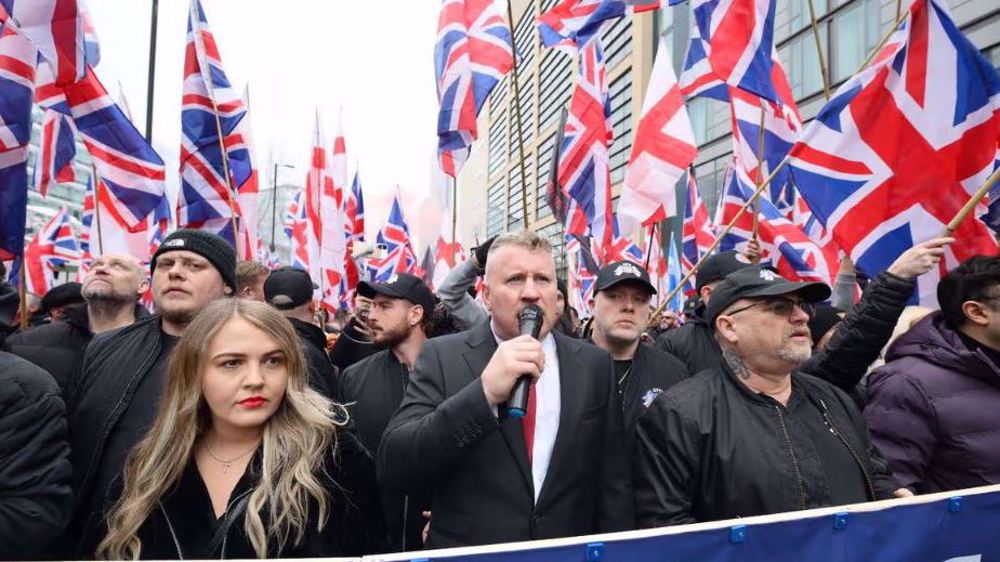
Manchester witnessed a striking display of patriotic conviction on Saturday as supporters of Britain First gathered in the city centre to demand tougher immigration enforcement, stronger borders and a renewed commitment to national sovereignty. Despite attempts by far-left activists aligned with the Antifa movement to disrupt proceedings, the nationalist rally proceeded under significant police protection, underscoring both the strength of feeling on the right and the increasingly combative tactics of its opponents.
What unfolded was more than a protest. It was a clear signal that a growing number of Britons are no longer content with what they see as weak border control, uneven law enforcement and political timidity in the face of mounting migration pressures. The turnout reflected a constituency that feels unheard in Westminster yet remains determined to express its concerns peacefully and visibly.
A Peaceful Show of Patriotism
Supporters began assembling near Piccadilly Station shortly after midday, many carrying Union Flags and placards calling for “remigration” and the removal of those residing in the country unlawfully. The atmosphere among marchers was orderly and purposeful. Chants focused on border security, national identity and the rule of law.
For participants, the march represented a lawful and democratic assertion of rights that they believe are too often dismissed in mainstream discourse. Organisers framed the event as a defence of British values, arguing that national cohesion and secure borders are not extremist demands but foundational principles of any sovereign state.
Greater Manchester Police had prepared extensively for the rally, imposing a 10-hour dispersal order across parts of the city centre and deploying additional officers to prevent confrontation. The need for such measures reflected not the conduct of the nationalist marchers themselves, but the anticipated presence of a large counter-demonstration.
Far-Left Mobilisation and Attempts to Obstruct
Opposing the march was a substantial counter-protest organised by a coalition of Islamist groups and Antifa activists. Within that coalition were individuals and factions associated with Antifa, a loosely organised but ideologically rigid network known for confrontational street tactics.
While billed as a peaceful stand against extremism, elements of the counter-demonstration adopted aggressive methods. Groups attempted to obstruct the planned route of the nationalist march, staging sit-ins and physically positioning themselves to impede progress. Police were repeatedly required to form lines between the two sides as tempers flared.
Video footage circulating online showed officers intervening to prevent direct clashes. In several instances, counter-protesters moved towards nationalist supporters in what appeared to be deliberate attempts to provoke confrontation. These scenes reinforced longstanding concerns that Antifa operates less as a debating force and more as a street-level pressure group intent on silencing opposing views.
Law and Order Prevail
Greater Manchester Police confirmed that 11 individuals were arrested during the operation. Alleged offences included public order breaches, assaulting emergency workers and violations of dispersal conditions. Investigations remain ongoing.
Although police did not publicly break down the political affiliations of those detained, the day’s most visible instances of disorder arose during attempts to obstruct or confront the nationalist march. For many observers, this pattern reflects a broader issue in modern protest culture, where self-described antifascist groups seek to curtail lawful assembly rather than engage in democratic debate.
Despite these attempts at disruption, the Britain First march concluded without descending into uncontrolled violence. The presence of disciplined supporters and a robust policing operation ensured that public order was maintained. For nationalist participants, this outcome was proof that their movement can assert itself in the public square without succumbing to chaos.
A Growing National Sentiment
The Manchester rally did not occur in isolation. Immigration remains one of the most pressing concerns for voters across the United Kingdom. From record small boat crossings to strained local services, public confidence in the government’s handling of borders has been eroded.
Saturday’s turnout suggested that frustration is crystallising into organised political action. For supporters, calls for deportation of illegal migrants and stronger enforcement are not radical, but rational responses to what they see as prolonged governmental inaction.
Critics frequently characterise such positions as divisive. Yet the presence of families, pensioners and ordinary working people among the marchers told a different story. Many attendees described themselves not as extremists, but as citizens who feel compelled to defend national interests in the absence of decisive leadership.
Extremism on the Streets
The role of Antifa-aligned activists in the counter-protest will likely remain a focal point of debate. The movement’s decentralised structure allows participants to deny formal organisation, yet its tactics are consistent. Direct action, route blockades and attempts to overwhelm opposing demonstrations are hallmarks of its approach.
To many in Manchester on Saturday, this resembled ideological enforcement rather than peaceful dissent. When one political faction seeks to prevent another from marching at all, the line between protest and coercion begins to blur.
The spectacle of officers standing shoulder to shoulder to separate rival groups also highlighted a deeper concern. A democratic society depends on open debate and lawful assembly. When political disagreements are played out through physical obstruction and intimidation, civic trust is weakened.
A Moment of Resolve
For Britain First supporters, the day represented a moment of resolve rather than retreat. Despite facing opposition and an atmosphere charged with hostility, they maintained their presence and delivered their message.
Manchester on 21 February demonstrated that nationalist sentiment is neither marginal nor easily suppressed. It also exposed the extent to which far-left activism is prepared to mobilise in order to shut down dissenting voices.
As Britain continues to grapple with immigration, identity and national direction, the scenes in Manchester may come to symbolise a broader shift. A confident, assertive right is increasingly willing to take its case directly to the public, while its opponents rely ever more heavily on disruption to contain that message.
In the end, law and order held. The right marched. The police maintained control. And a debate that many feel has been stifled in elite circles was carried unmistakably into the heart of one of Britain’s great cities.
 The National Brief